Wetenschappelijk nieuws

Persbericht Beperk de Straling: Deense studie naar hersentumoren door gsm-gebruik waardeloos


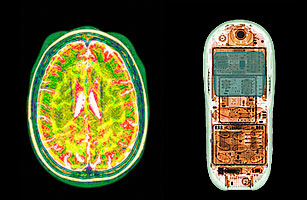
hcellphone_0613Eerder deze week kwam er het bericht dat de 'grootste studie ooit' naar gsm's 'opnieuw bevestigt' dat mobiel telefoneren geen hersentumoren veroorzaakt. Talloze wetenschappers zijn van mening dat verschillende, onoverkomelijke methodologische fouten de studie compleet waardeloos en onverantwoord maken.


Onder meer Prof. dr. Devra Davis, de voormalige directrice van het Centrum voor Milieuoncologie aan de University of Pittsburgh Cancer Institute, wijst erop dat fouten werden gemaakt die het a priori onmogelijk maakten om verschillen te vinden tussen de groep gsm-gebruikers en niet-gebruikers.


Ten eerste werden de zwaarste gebruikers, namelijk de professionele gebruikers, uit de studie weggelaten. Onbegrijpelijk, want als er nu één groep is die wetenschappers zouden moeten bestuderen, dan zijn het wel de professionele gebruikers die reeds in de jaren '90 intensief belden. Ten tweede werden alle personen die na 1995 een gsm zijn beginnen gebruiken, evenals zij die gebruik maken van prepaid-kaarten (in tegenstelling tot een abonnement), geklasseerd als 'niet-gebruiker'! In de studie heeft men dus geen gsm-gebruikers vergeleken met niet gebruikers, maar gebruikers met gebruikers....
 

Lees meer...

Veranderingen neurotransmitters onder invloed velden zendmast mobiele telefonie


Wissenschaftlicher Originalbeitrag maart 2011

Abstract


Modification of clinically important neurotransmittersunder the influence of modulated high-frequency fields -A long-term study under true-to-life conditions


This long-term study over one and a half years shows a significant activation of the 60 participants´ adrenergic systems after the installation of a regional mobiletelephone transmitting station in the village of Rimbach (Bavaria). The values of the stress hormones adrenaline and noradrenaline grow significantlyduring the first six months after starting the GSM transmitter; the values of theprecursor substance dopamine decreases substantially after the beginning of the radiation (Wilcoxon test, p<0,0002). The initial condition is not restored even after one and a half years.


Due to the not regulable chronic difficulties of the stressbalance, the phenylethylamine (PEA) values drop until the end of the research period (Wilcoxon test, p<0,0001). The effects show a dose effect relation and are situated far under the valid limits for technical high-frequency stress. Chronic dysregulations of the catecholamine system have a substantial health relevance and cause health damages in the long run.


umwelt medizin gesellschaft 2011; 24(1): 44-57


Lees meer...

Research On Biological Effects Of Radio Frequency Radiation In Eurasian Communist Countries, 1976


February 24, 2011. The Defense Intelligence Agency of the United States released a document referenced below that had a security classification as "confidential" and has since been "unclassified". This document may help us better understand why the U.S. military is interested in opposing a more protective guideline for microwave radiation.Adams, R.L. and R.A. Williams. 1976. Biological Effects of Electromagnetic Radiation (Radiowaves and Microwaves) – Eurasian Communist Countries (U). Prepared by U.S. Army Medical Intelligence and Information Agency Office of the Surgeon General and was released by the Defense Intelligence Agency. 34 pp. Unclassified.


Abstract: This study was undertaken to provide a review and evaluation of the current Eurasian Communist country state-of-the-art in the area of the effects of radiowaves and microwaves. It generally covers the 1968-1975 period. The major topics include discussions of the effects on humans and animals. The study provides information on the genera1 trends of research with special attention to possible military applications. Where appropriate, information on safety standards and research personalities and facilities is provided.


Lees meer...

Straling en slaap

  • Overzicht van de studies die tonen dat straling de productie van melatonine ('slaaphormoon') verstoort

  • Studie: Exposure to pulsed high-frequency electromagnetic field during waking affects human sleep EEG, gepubliceerd in NeuroReport

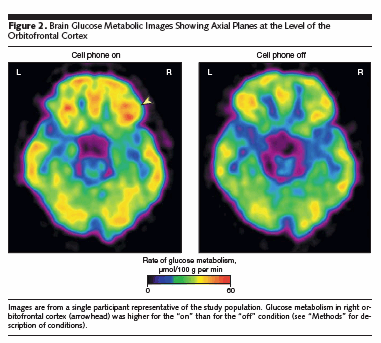
    "The aim of the study was to investigate whether the electromagnetic field (EMF) emitted by digital radiotelephone handsets affects brain physiology.(...) The present results demonstrate that exposure during waking modifies the EEG during subsequent sleep. Thus the changes of brain function induced by pulsed high-frequency EMF outlast the exposure period."

  • Studie: The Effects of 884MHz GSM Wireless Communication Signals on Self-reported Symptoms and Sleep | An Experimental Provocation Study, gepubliceerd in PIERS online

    "The study indicates that during laboratory exposure to 884MHz wireless signals, components of sleep, believed to be important for recovery from daily wear and tear, are adversely affected. Moreover, participants that otherwise have no self-reported symptoms related to mobile phone use, appear to have more headaches during actual radiofrequency exposure as compared to sham exposure."

  • Mobile phone radiation wrecks your sleep - een artikel uit de Britse krant The Independent

    "The research shows that using the handsets before bed causes people to take longer to reach the deeper stages of sleep and to spend less time in them, interfering with the body's ability to repair damage suffered during the day"

    "it has caused serious concern among top sleep experts, one of whom said that there was now ''more than sufficient evidence'' to show that the radiation ''affects deep sleep''

    "(...) believes that the radiation may activate the brain's stress system, ''making people more alert and more focused, and decreasing their ability to wind down and fall asleep''

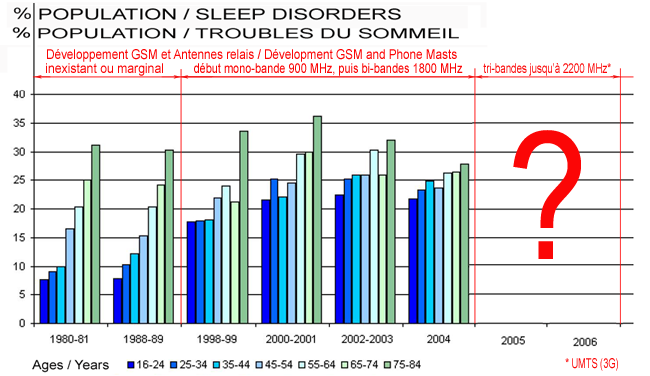
GRAPHS_1960_2004_TS_UMTS_2006

  • Twee studies die effecten op EEG tonen

  • Overzicht van studies die een invloed tonen op het functioneren van de hersenen en het zenuwstelsel (Electric Words)

  • Studie gepubliceerd in Electromagnetic Biology and Medicine (2011) die verminderde melatonine-productie aantoont
  • Slaapproblemen zijn in Zweden dramatisch gestegen

    Tijdens het 18de Congres van de European Sleep Research Society in Innsbruck, Oostenrijk (12-16 sept. 2006), hebben onderzoekers van de Universiteit van Uppsala de resultaten van hun onderzoek over slaap in Zweden toegelicht.

    In 1981 en 2003 beantwoordde een representatief aantal mensen de volgende vraag: 'Had u slaapproblemen tijdens de laatste twee weken?'

    In 1981 antwoordden 9% van de respondenten 'ja', terwijl in 2003 43% van de respondenten 'ja' antwoordden.

    Dit is een vijfvoudige verhoging van slaapproblemen tijdens de afgelopen 20 jaar, een onrustwekkend cijfer.

    Bron: (2006), Insomnia. Journal of Sleep Research, 15: 154–161, bron: Next Up
  • 10 millions d'insomniaques en France. Les téléphones portables contribuent ils à ces troubles?

    "Les champs électromagnétiques des téléphones portables pourraient interférer avec les ondes cérébrales, et favoriser des troubles telle que l'insomnie, d'après les chercheurs de la Swinburne University of Technology de Melbourne, en Australie. Pour eux, les ondes du téléphone portable accroissent de façon importante l'activité des ondes alfa du cerveau. Or, ces dernières agiraient sur la distinction entre l'état de sommeil et l'état de veille.

    Une seconde étude, menée au Royaume-Uni, par les chercheurs de la Loughborough University sleep, conclut, elle, que d'autres types d'ondes cérébrales, les ondes delta, également liées au sommeil, seraient également sollicitées par les émanations des téléphones portables : Les cobayes soumis à ces champs électromagnétiques ont eu besoin de deux fois plus de temps pour s'endormir que les autres. Le temps de passer quelques coups de fil..."
  • Zie ook volgende webpagina van de Franse organisatie Next Up

Lees meer...

The Society of Negative Results


(Zie de 'Short Takes' van 4 februari op Microwave News voor het artikel met alle links.)


Publication bias is a well-known problem —it's defined in a recent, widely read New Yorker article as "the tendency of scientists and scientific journals to prefer positive data over null results, which is what happens when no effect is found." This may be generally true, but once again, the usual rules don't apply to EMFs. Here researchers (and editors) are all too often more interested in publishing failures than successes. Actually, for EMFs, failure is success, promising financial rewards of one kind or another. This is an old story, but now Niels Kuster says enough is enough. In a broadside against the Bioelectromagnetics Society (BEMS), Kuster warns that the society is "threatened" by its "biased scientific culture."


Lees meer...

Top researchers advise precaution on mobile phone use


In a dramatic message in the Journal Occupational and Environmental Medicine, two leading Interphone researchers now advise the following: Simple and low-cost measures, such as the use of text messages, hands-free kits and/or the loudspeaker mode of the phone could substantially reduce exposure to the brain from mobile phones. Therefore, until definitive scientific answers are available, the adoption of such precautions, particularly among young people, is advisable.


Lees meer...

Selectie van 139 studies die schadelijke effecten tonen bij lage stralingsniveaus


"This partial list shows recent studies (mostly since 2000) that found an effect from radio frequency electro-magnetic fields at or below the power levels of mobile phones (i.e. equivalent to SAR 2 W/kg - many exposures are much lower than this). If all positive studies were included there would be more than 500."


Samengesteld door Powerwatch UK.


Klik hier voor het PDF bestand (of XLS spreadsheet).

Negatieve impact op mannelijke vruchtbaarheid


De Hindu Times publiceerde een artikel over de alarmerende resultaten van het onderzoek van Prof. Behari waar Stopumts al eerder over berichtte zie hier.


The exposure to radiation from mobile towers and mobile phones could have an adverse impact on male fertility, according to an ongoing Jawaharlal Nehru University study.


Lees meer...

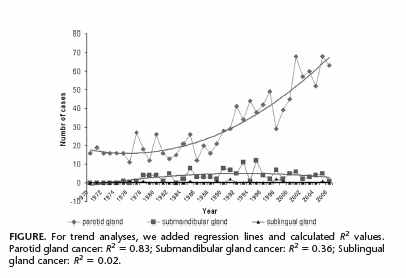
Opvallende toename speekselklierkanker laatste 10 jaar


Stopumts.nl - In een brief aan het tijdschrift Epidemiology schrijven de onderzoekers Czerninski en Zini over de verontrustende stijging, vooral na 2001, van speekselklierkanker onder de bevolking van Israël. De onderzoekers stellen dat dit mogelijk te wijten is aan de enorme toename in gsm-gebruik.


Stijging_speekselklierkanker


Lees meer...

Nieuwe studie: gsm-gebruik en gedragsproblemen bij jonge kinderen

Een nieuwe studie bij uitgevoerd bij 100.000 vrouwen bevestigt dat moeders die een gsm gebruiken tijdens de zwangerschap, een grotere kans hebben dat hun kinderen later gedragsproblemen zullen vertonen.


"Pregnant mums who regularly use mobile phones may be more likely to have kids with behavioural problems, particularly if those children start using mobile phones early themselves, suggests research published online in the Journal of Epidemiology and Community Health."


Lees meer...